Only in Dark the Light

Archive of Our Own
Fandom: Earthsea – Ursula K. Le Guin
Relationship: Azver/Irian

The Doorkeeper of Roke may be ageless, but the Azver the Master Patterner was not and as he grew first older and then old, a change came to Roke like the incoming of the tide, or perhaps its departure, depending on which Master of Roke you asked.

Hara the sorcerer and Tehanu and Orm Irian the dragons had brought down the wall imprisoning the dead all at once, but Irian’s time earlier on Roke started a slower change of its own. No words had been spoken, no proclamations uttered, but every so often now, a girl or young woman came to Roke, seeking shelter and education, and seeking to be a wizard. The Doorkeeper said yes, the Patterner said nothing, and the other Masters said many words that somehow weren’t quite no, and so it was that some of students on Roke, and some of the younger wizards returning to their home isle, were now women.

One such, the girl Resik, had proved to be an adept under the Master Summoner, and had spent much time under the tutelage of the Master Namer, and yet it had come to pass that her time, when not called upon for lessons, had been spent more and more in the Immanent Grove, learning what the Master Patterner and the Grove itself had to teach her.

As the years past and he grew frail, Azver left the Grove less and less even though his wanderings in it now could not take him far. Resik became the Master Patterner in all but name, the link between the Grove and the Great House. She and her own students saw to Azver’s hut when he couldn’t, and walked and talked with him when he was willing, and he was glad, seeing in her and the students the next custodians and lovers of the forest.

And so it was until the messengers came from the King in Havnor telling of the death of the Archmage Sparrowhawk on Gont, naming him by his true name, Ged. And with them came a Gontish apprentice of Master Pine recommended for the particular attention of his own Master, the Summoner, bearing a letter for the Master Patterner from the White Lady.

*~*~*

Azver found the letter in his hut, evidently left there by Resik or some other master or student of some sensitivity who knew that he would want to see it, and read it, alone. From the first few words, he knew it to be Kargish, written in the Hardic script but without the strike through each character to cancel out sorcery common to that people.

He thus knew whom it was from, and what it said, and read it anyway.

The last Archmage is dead, he thought to himself, and knew it to be wrong.

“Ged is dead,” he said aloud, correcting himself. He reread Tenar’s words carefully; he was in no hurry.

“He walked in the forest every day until he could not any more,” she wrote. “He looked into the west every day until he saw no longer. She did not come, Azver, and I do not know why.”

Azver did not know why either. He smiled. He could not explain a dragon to her own mother. She would have to explain herself some day. He set the letter aside.

As the sun grew high in the sky and the day warmed, he walked the edge of the forest, to a low hill where he and Ged had sometimes sat and talked, but more often listened to the words in the trees, and the silences between them. Would that his friend had been content to sit here forever, deaf to the calls of boats and dragons and young princes and former priestesses… but even as he thought this, Azver the soldier was already laughing at Azver the Patterner. Neither he nor Ged nor anyone else was made to spend an entire life in the forest. He stayed some hours longer, until the sun was well past noon, and so said goodbye to Ged, his friend.

He returned to his hut and ordered his few things for Resik or their students to find. He laid his staff carefully on his bed. He placed Tenar’s letter in the fire; Thorion was long dead and the Doorkeeper did not need news from the Master Patterner, and so there was no one left on Roke now who should hear Tenar’s words. No doubt the Masters of Roke had heard from the King that the Archmage was dead, the King would have spoken Ged’s name, and that was all as it should be and none of his concern.

He extinguished the fire and and walked out of the hut into the dusk. He looked up into the leaves fluttering in the last light. “Ged” some whispered to him at the edge of hearing. “Ged.” Perhaps they whispered another name too, but if so, he couldn’t quite make it out. And then the wind dropped and they fell silent.

He looked deeper into the forest to a part where the ground sloped down and the light grew dimmer. No sound came. If there was a light down there, his old eyes could not make it out. He waited for a sign and there was none. And he smiled with absolute certainty into the darkness. “Irian,” he said, and walked deeper into the forest for the last time.

“Azver,” the leaves whispered behind him after he departed. “Azver.”

Force and blessed power

Archive of Our Own
Fandom: October Daye Series – Seanan McGuire
Characters: Eira Rosynhwyr

May all to Athens back again repair
And think no more of this night’s accidents
But as the fierce vexation of a dream.
But first I will release the fairy queen.
Be as thou wast wont to be;
See as thou wast wont to see:
Dian’s bud o’er Cupid’s flower
Hath such force and blessed power.
Now, my Titania; wake you, my sweet queen.
A Midsummer Night’s Dream, Act IV, Scene I

They think they have the secret of elf-shot in the unbinding. But I don’t think so. And I guess, now that you’re here, neither do you. Do you? The secret of elf-shot has always been dreams and strength. The weak and useless perish, the pure and untainted slumber, and the strong walk in dreams, and tell their story. As many times as it takes to be believed.

And you owe me a hearing I think. You’ve certainly given October the Liar’s Daughter one haven’t you? Fair’s fair, they say, whoever they are. I say: welcome to my dream, and you’re getting my story whether you like it or not.

I know what you want. You want them all to be happy, the Liar’s changeling, the hidden prince, the cat with his saucer of cream. You want the Lady of the Lake to bestow and withhold her favours freely, as she used to. You want the souls of the Roane to have lived on in their skins, waiting for their mother’s freedom and you want them to swim in a clean ocean that the human filth haven’t defiled.

Well, you certainly have a lot of faith in the changeling daughter of Amandine the Liar, don’t you? Certainly so far she’s not broken anything that someone can’t put back together for her, but is that really to her credit? She has known what I am and what I can do for a year or more now, and she is yet to raise her army, or even dream that she needs one that exceeds the number of beds in her house.

Your faith is in lost children and grieving mothers. What a sweet dream. It will be unpleasant to wake from.

Perhaps you should dream my dream. I’ve always rewarded the canny, the brave, the ones with their eyes open. Consider Simon Torquill, if only for a time. Which Torquill brother would you truly rather be? The blustering, boasting Sylvester, wrapped up tight in roses and lies and the illusion of love? Or Simon at the height of his powers: my right hand, tutored in the ways of blood by two Firstborn, and freed from the lies of the lesser of the two? Or consider Rayseline, to whom I’ve shown the darkness, and who survived to turn the snake on itself, to remove forever one of Amandine’s line from the game, and finally to burn her mother’s legacy away and dream better dreams.

Oh but the hero’s dream is a sweet dream indeed, I know. I too am Oberon’s daughter after all. Freedom and happiness for all. Or at least for one or two, I’m sure. Do you truly want Antigone unbound? Free to bestow her favours on only one side, hers? Do you trust that that her side will always be your side? Let me disillusion you: a true daughter of Maeve, her side is always the side of the water. There’s only ever one thing she truly wants. Do you also wish to meet the Unseelie Queen then, her powers restored? The power of water is magnificent, and it is to wear down, and to drown. When Maeve Rides again, she and hers will ride the waves that smother you.

But, your last argument! In my dream, you now speak of a nightmare. What of Titiana, the beautiful, cruel, Summer Queen you ask? Yes, yes, of course, she was my mother. Don’t look so proud of yourself, it’s hardly a secret. There are those who say that I am but a shadow of that beautiful spider, bent on the destruction of Maeve first in mind, then in body, and finally in magic. And they are entirely and absolutely correct. I am as beautiful as the north star and as cruel as the north wind, and I am only a flickering shadow of my mother’s grace and evil.

Here is your nightmare: it is my mother also Antigone will bring back to you. Oberon’s last get and her spawn are my father’s blood key, his way home; Antigone sees it, I see it, and poor silly Amandine lives it in every beat of her heart. Amandine’s blood, and the blood of her hot-headed, stupid, daughters, are my father’s road home, and with him, his wives. The Unseelie Queen, as permanent and inexorable as water, and my mother. My mother who is so strong and so perfect she bound the daughter of the water against her own nature.

Do you want them to walk that road home to us? Do you want to meet them? The faithless Oberon? Maeve who longs to drown the world in her neverending tears? Titania, who would burn it in a moment if she thought it might amuse her?

I don’t either. Not ever again.

But can you lock the door against them, our lost Lords and Ladies, our terrible parents, our creators, our destroyers? Can you bar it with roses and blood, veins and thorns woven around each other and feeding each other until sap flows through flesh and blood through wood? Can you freeze it all in place, winter above and below, and within? Can you hold the door against the first parents, the gods themselves, against their fire and feeling? Can you freeze the lock even in dreams, all the dreams of all the world?

Of course, you cannot.

But I can. Do not think I do not know what is needed to bar that door. I’ve sacrificed Antigone’s children. I’ll sacrifice Amandine’s. And when all is night and cold, and yet more darkness and yet more snow is needed, I’ll sacrifice my children to lock that door forever.

I therefore put it to you: you have one chance, and one choice. Choose the Rose of Winter.

Living the revolution: Coda

Chapter 4 of Living the Revolution (AO3)

← Chapter 3

The Second Three Day Strike in Bershort began with the cleaners again. It briefly appeared that it would become a general strike, but swift and well-informed enforcement targetted at the leaders of the strike contained the unrest and restored order.

Laia Asieo Odo and Ketel Evad Boro were among those arrested in the last stand in the old square. Boro pleaded guilty in the face of overwhelming evidence to the offence of revolutional mind, and was jailed for five years, dying of jail fever within two. A customary reverence for the misled soul was held by her former colleagues, with personal readings only from her academic work. Collections of her revolutionary writings remain incomplete, as much is believed to have been destroyed with the Bershort Shared House.

Odo refused to enter a plea or mount a defence. Kieda Ettad issued a statement from underground Movement publishing presses praising her silence as the only correct response to the rotten stench of archism that pervaded the legal system from top to bottom. Taviri Odo Asieo gave a widely circulated speech on Odo’s ethics of possession, referring to it as “Odonian”, a term adopted by many followers for the Movement as a whole within the year. Odo’s later writings commented on neither action, although her Prison Letters carry an emphasis on the dangers of leader-worship among revolutionaries that is lacking in earlier writings.

~*~*~*

In the end it was not Taviri who gave his beloved to the revolution, but Laia who gave hers. Laia was awaiting trial in the north at the time of the Capitol Uprising and it was weeks more before she heard of the four thousand bodies in the quicklime, Taviri and Ettad among them.

The sun rose in the morning, and she found out about even that on their schedule. Grey light and yellow for hours, then the patch of sun on the wall, then gone. She had lost track of the days, dammit, she’d lost track of the days. But did that matter? They sent someone important to tell her he’d died, she guessed. She guessed this smirking man in an ill-fitting prison guard uniform was someone important to them, and she guessed he was happy that Taviri was dead. She guessed he hadn’t killed him though, or he would have said, because he would have been happy about that and he didn’t seem the type to not share his happiness around.

He made her sick, sick as she sat there and pretended she didn’t hear what he said, sick as the real guard spat at her — stupid long-hair slut — sick because no one was happy and no one was human, not her and not them. Sister, they called her, laughing, and it was a mockery. And all she could think of was cancer, the sick cell with the bloated nucleus, taking and taking until the body was killed, and dying with it. Within a week, scribbling in a tiny hand on the paper allotted to her, she had finished the introduction to The Analogy, with its elaborate and provocative images of archism as a systemic disease.

She understood better why Ettad had wanted something else for her: if she had known what it was to lose them, indeed she might have chosen Taviri or Boro or him or their many friends lost in the uprisings that decade over The Analogy and perhaps all that it brought about too. But there was no such choice on offer to her and there never had been, not in her revolution and not in anyone else’s. No one had chosen to leave her to her work, so she chose to keep doing it.

~*~*~*

Nine years later Laia Asieo Odo walked free from jail with her head held high, The Analogy already in wide circulation. Shortly thereafter she edited the lengthy volume The Revolutionary Household, primarily composed of writing from the scattered surviving Bershort revolutionaries describing the Shared House model, and extensions and analogies from it to urban and regional collective organising. The Shared House model was later referred to as the Odonian House model in central A-Io due to its association with her and the Movement. In this and other cases, the extent to which Odo sought, or did not sufficiently rupidiate, credit for work that originated with other individuals and collectives, remains in dispute.

Living the revolution: Bershort

Chapter 3 of Living the Revolution (AO3)

← Chapter 2

Being unbundled from a closed container after an uncertain number of hours of travel along unknown roads always puts one at a disadvantage when it comes to responding to the unexpected.

The expected for Laia would have been finding herself in a shipping bay, at a dock, or in an underground station, to be passed swiftly and silently into new hands, the tactics of revolution sometimes looking and feeling not a lot different from the ways of secret police. Laia had steeled herself for this as the vehicle halted and she felt and heard the hydralics lift her container to the ground. There was the sound of the lid being lifted, and she found herself looking up at the sky from her crouch-height box. The dark outline of head and shoulders appeared against the sky. “Happy stay,” a man’s voice wished her, and his retreating footsteps and the sound of the van starting suggested he had been the driver, taking an unusual risk in letting her even chance seeing his face.

She sat there for several minutes waiting, hearing only the sounds of a nearby house or homestead, and of livestock. She eventually peered up and climbed out, indeed finding herself near the trucking entrance of a the farmyard of a semi-rural homestead. She could see several other similar buildings nearby, limiting the possible size of this farm to one that meet feed ten or fifteen people. Several workers were visible. Some looked at her and signalled greetings without evicing any particular surprise or concern, and one came down to the crate, helped her climb out and then greeted her as “sister” and welcomed her to Bershort Shared House, suggesting that she go to the building.

It was Ketel Evad Boro herself, the founder of the Bershort Shared House, who greeted Laia at the entrance. She was indeed an older woman, Laia would have guessed white-haired except that Boro was as closely shaved and shiny as any vain young urban woman could ever hope to be. Laia shook her still new head of curls reflexively, more feeling that they were still there than intending to consciously signal anything to Boro, but her host looked as if she’d taken an insult from it. After mutual introductions, they walked silently to the offices at the front of the building.

“The lodging book lists three beds,” Boro reported, gazing at her to the point of rudeness. “One private, two in the women’s dormitory.”

“I will sleep in the dormitory,” Laia replied, returning her gaze. “Was that a test? I despise them. State openly what you think of me, and I will do the same.”

“I haven’t decided what I think of you,” Boro replied readily. “I will certainly tell you when I do.”

“Likewise,” Laia assured her.

The next hour wasn’t promising. Boro gave Laia what seemed to be the standard tour of the Shared House, which appeared to omit nothing about their arrangements, down to a recent story about how, since all household chores were voluntary, some of the animals they raised for food had become undernourished, and how the House had responded to this challenge, and how that related to the similar failing to respond to a bedding infestation crisis the year before. Laia spent her life among activists whose conversation continually returned to their immense personal contributions to the revolution, but even so, making fighting about chores the centrepiece was exceptional among effective activists. She reminded herself several times not to forget how very effective Boro was reputed to be.

She and Boro parted for the afternoon meal, still on wary terms. Laia reporting directly for kitchen duty afterwards. She and her brothers and sisters might not have consensus meetings about chicken-rearing philosophy, but she consoled herself that they did understand that no one did the work unless everyone did. The kitchen staff that night accepted her help without comment or surprise.

However, Laia’s frustration grew over the next few days. She had expected, if welcomed at all, to be spirited between safe-houses, if nothing else to reduce the culpability of any individual person in harbouring her. But instead she was openly a resident of what was clearly a hub for regional organising, meeting visitors daily who were introduced to her by name. And conversations about strike organising were alternated with conversations about what how anarchist education models could create non-coercive consensus-based conservation policy, whether or not the library’s records were kept to everyone’s satisfaction, and endless discussions about the chickens. And everything was treated as equally important. The only person in the House who understood the Bershort transport system was unavailable to her and the other strike planners for hours during the finer details of the library debate.

When the strike planning meeting broke up that afternoon, Laia went to the shared work board and assigned herself the job of stripping and re-making the bedding in the western wing. This included Boro’s room — private, and in a hall which would give it a lovely view of the farms, Laia noted — and Boro was working at her desk. The Shared House had a lower respect for privacy than Laia was accustomed to, and she evidently surprised Boro by asking to enter.

“It’s not my room, sister,” Boro told her. “It is the room I work in.”

Laia completely agreed, but observed “I ask whether it is a good time to interrupt the work, rather than enter the room!”

Once she had stripped the sheets and was surveying the room, which she would never have considered either not doing, or doing discreetly, she again considered that she might be unreasonably judging Boro: the room was well lit with the view but small, and it didn’t seem that Boro hoarded books even as much as Taviri did. Only three volumes lay open in her working area, and another two were neatly stacked in the carton that the library worker would collect in their daily rounds.

“What is the work?” Laia asked. She had been in the Shared House a week, long enough to re-train herself not to simply grab people’s papers and start to read as she would Taviri’s or her friends’.

“A short treatise on the philosophy of the Shared House,” Boro replied. “It’s only a sketch, I have a long work in progress, but I am becoming convinced of the effectiveness of your pamphlets. I am in the habit of books, myself, but if we produced the same, then you might have read them before you arrived here, and things would go easier with you and your brothers and sisters.”

“Things go easily enough,” Laia said. The work she had come to do was getting done, after all.

“They do not,” Boro told her, preemptorially. “They do not because this happens over and over. Our brothers and sisters in the revolution come, and they share in the washing and the feeding, but they don’t talk about it, and they don’t understand us talking about it, because they don’t think it is worth talking about. Or is that not so?”

“We don’t talk about it to the same degree, no,” Laia replied.

“Not to nearly the same degree, yes?” Boro asked. “Which, sister, is a critical failing. Really fucking stupid.” She lifted her chin and waited.

This was Laia’s mode of argument: she dropped the bundle of bedding and sat herself down on it and replied easily “Enlighten me.”

This is what the revolution looks like,” Boro replied. “Not sleeping in attics of safe-houses. That’s before the revolution. Living the revolution will be houses and farms and research labs and childrearing.”

“This isn’t a new argument to me, sister,” Laia said.

Boro made an exasperated gesture. “Of course not, but you haven’t taken it to the fucking conclusion, because you’re still living in safe-houses and attices and travelling in crates, aren’t you? It’s a practical matter: we don’t want to bring the revolution and have no idea how to live once we are living it. Yes, I know, still not a new argument. This is the new argument: we bring the revolution only by living as if it has already happened. And if you’re about to tell me that’s not a new argument either, don’t bother, I was an academic, I know there’s always someone who wrote it down. No one is living like this. No one is living like the revolution has already come. No one else is letting the archists next door look over the fence. You’re going to tell me someone is, right? Still with the originality.”

Laia thought about it. “It happens,” she said. “But it’s a pacificist thing. We fight. They demonstrate.”

“Well, pacifists we sure as shit are not,” Boro said. “Don’t think I don’t know how short our Shared House’s life will be as a result. But while it’s here, a few more people have thought about how to borrow books and feed chickens when the revolution comes. And that, sister, is my revolution.”

→ Chapter 4

Living the revolution: After the election

Chapter 2 of Living the Revolution (AO3)

← Chapter 1

The 743 election of the General Assembly of the nation of A-Io was the first since the passage of the property reforms of 472 in which married women could vote. By convention, ballots were held up to the sunlight for blessing before being submitted for counting, and many of the women who had been part of the Women’s Strike of 729, who had lain down in the streets in such numbers that commerce could not be conducted in the capital for two days, held their blue women’s ballots high for the cameras. Laia Asieo Odo, who ten years before had been the regional head of the Women’s Autonomy Division but was now estranged from its leadership committee, was filmed spitting on her ballot paper and tearing it in two.

Despite the forecasts of many reformers, and the election of seven women to the Assembly, the participation of women voters in the election did not break the stranglehold of the Solar Division on the nation’s governance. The Division yet again secured the top posts in both science and religious matters, the fifth consecutive election in which they increased their hold over of the twin pillars of A-Io society.

Over the following year, fractures in the north of the nation — the base of manufacturing and the centre of some remaining minority religious observances after centuries of repression — continued to grow in the wake of the election, culminating in the Three Day Strike in Bershort. Following the crackdown, travel remained impossible for a half-year and correspondence of anything but the most innocuous nature for considerably longer.

~*~*~*

The Movement anarchists whose network centered around Kieda Ettad and his printing presses received varying information from contacts in the north, some almost certainly intended to deceive the police, and many so deliberately obscured that their meaning was lost, but overall it was understood that the Three Day Strike could happen again, and that essential government service staff might this time be able to effect the functioning of government long enough to enable a temporary revolution. Permanent, if it could be spread.

Laia, understanding this, made preparations to travel. The normal three day distance by train would be seven at least through trusted lorry drivers and sympathisers’ private cars now that enforcement was so heavy. She ruthlessly sorted through the very few objects she and Taviri had with them, ascertaining which could be be best used by others and so distributing them. As usual in the process items that others would have thought of as Taviri’s, or their hosts’, to give away were regarded as equally ripe for redistribution. She committed several recent short pamphlets to memory which she could voiceprint on her arrival, concentrating on strategies for building free solidarity amongst uncertain populations.

She and Taviri were now staying several blocks from the latest home of the presses. This was risky because her movements could and would be noted, endangering not one but two safe-houses, but her working relationship with Ettad had deteriorated over the year. The power structure of the Movement, as Laia raged to Taviri, meant that she had to be pushed out, not he. And in order to access his network and remain in touch with Bershort however tenuously, she had to make what she called her pilgrimages, still.

Some days before her departure she made what she sincerely hoped would be the last such. She had brought proofs of new pamphlets for Ettad but left copies with Taviri also. Awful to suspect that Ettad might sit on them rather than share them. She still thought that he would choose to publish, but wished that the concern didn’t exist at all.

But instead of a conversation about editing and publishing, or one about strategies, Ettad had an entirely different and unwelcome topic for her: he wanted her not to travel to Bershort!

“You aren’t the sole messenger of the revolution,” Ettad told her. “Asieo isn’t telling you this, so I am. You aren’t the revolution’s high priestess. It didn’t stop dead in its tracks this last year.”

“And who goes to Bershort, if I don’t?” Laia replied. “Who goes, Ettad? Are you going? Is Asieo going? No? Who goes?”

“Maybe no one goes,” Ettad said. “Maybe you are not in jail because of a tiny rally. Maybe they aren’t in jail either, Boro and her people. You’re not going.”

“I do not take orders,” Laia said, suddenly deadly serious and cold. “I don’t even take them from the revolution, let alone from you. I choose, brother.” Over the last year, something of a fashion for familial terms had grown in the Movement, and it stung to use them for Ettad. But it had never been about liking everyone, thankfully.

“Indeed you do not,” he agreed. “You choose. And surprise! Again you choose the stage and the glory. The high priestess of anarchy.”

Laia thought this was despicable. “It’s a tiny rally, or glory,” she snapped. “Make up your mind. And you can take your high priestess thing and stuff it. The revolution doesn’t spring fully formed out of anyone’s head. We bring the revolution to each other, always, and if we don’t, then I do. If they do not like what I bring in Bershort, then they choose. But they only have the choice to accept or refuse our experiences and our tactics if we go, and one person wants to go and that person is me. As it so often is.”

“Until you die for it,” he told her.

“As a high priestess ought,” she taunted him. “Besides, who expects to live in the revolution now? You? I’ve long since expected to die without seeing it.”

He flicked his eyes to each side, the A-Ion gesture of exasperation. “Melodrama! Matyrdom!”

“What is this about?” she said, frustrated. “If you think my revolution has become personal grandstanding, condemn it, and condemn me. Convince people. I’ll hand out the pamphlets myself, I’ll take one to Boro and hand it to her with your compliments. You know I will.”

“It’s not just you you sacrifice, girl— sister,” he told her. “But Asieo too. Your marriage, your happiness.”

“What is this?” cried Laia. “I grandstand and I’m a bad wife, too! Tell me brother, which is the bigger sin?”

“If it comes to it,” Ettad said. “That you’re a bad wife. Or partner or whatever this new word is. You do better alive than dead, you two, for each other and for us all. And you do better together than apart. But only he seems to know it.”

“And he asked you of all people to explain this to me?” Laia said. She believed in Taviri and yet dreaded the answer.

“He asked me to do precisely nothing,” Ettad said. “You think you love the revolution, that’s nothing. Asieo gives you the revolution and he gives the revolution you. All you give is yourself. That’s nothing, nothing to what he gives. Do not go to Bershort.”

Laia swore at him as she pushed away her chair and stormed out of the room and consoled herself with a fearsome letter to the western central cell on avoiding the corrosive need to place the responsibility for upholding the pair bond on wives.

~*~*~*

“What if I die?” Laia asked Taviri.

“I’m told it’s inevitable,” he replied absently without looking up from the proofs he was working on.

“Not eventually,” she said. “Next week. Or next year. Blood on the flag stones. Disappeared in the night. What if I die?”

He gazed at her, waiting.

“Ettad,” she explained. “For some reason our marriage is more important than the revolution, now.”

“It’s not,” Taviri said. “Except in so far as it is the revolution.”

“Which it isn’t, you’ll note,” she told him.

Taviri put down his work and moved around behind her, scraping her curls back from her face and releasing them to spring up. “Your blood on the flag stones is one of my worst nightmares, love,” he said. “Perhaps that’s actually Ettad’s concern too.”

Laia made a gesture of agreement but told him: “It’s not mine.”

“What is your worst nightmare, then?” he asked her.

“That their jails will keep working,” she replied. “That we’ll never be free.”

“A good revolutionary answer,” Taviri told her with light mockery. “The Leadership Committee would approve. You could be General Secretary within the month.”

“I’ll begin my campaign then,” she replied in the same style. “I look forward to the rewards of being co-opted by the system.”

Taviri laughed, but he knew both that her answer as to her nightmare had been perfectly accurate, and they both knew that she would go to Bershort. But then, he had never doubted either. A common image in A-Ion poetry was the mythical lovers Urras and Anares circling their common centre, but in his view, he and Laia were more analogous to one of the inner planets and a small moon; he the moon, she the planet, and the revolution always the centre of their solar system.

She sat down at their desk, shoved his proofs aside, and within moments was lost in her writing. He smiled, and went to their hosts’ kitchen to make her dinner.

→ Chapter 3

Living the revolution: The Movement

Chapter 1 of Living the Revolution (AO3)
Fandoms: Hainish Cycle – Ursula K. Le Guin, The Dispossessed – Ursula K. Le Guin, Day Before the Revolution – Ursula K. Le Guin
Relationship: Laia Asieo Odo/Taviri Odo Asieo

Taviri was smiling at Laia, trying to cheer her up, and at that moment she hated him for it. “Like an otter, like a petted house otter!” she cried, rubbing her hands over her head against the growth of hair on her shaved scalp, the strands of hair still too short to curl or even stand up. “The worst kind of domestication, why do we do this to each other, why?”

“‘Archism is written on the body, and on the soul, it is only its faint shadow that is written in the law,'” Taviri quoted. “Or so I read in a book once.”

“A book you wrote,” Laia snapped at him, but she had centered herself enough to enjoy being angry, and they both knew it. “Don’t quote your damn books at me, I’ve heard all your opinions, and edited them besides.”

“Not at all girl,” he replied, suddenly serious. “Why would I quote my books at you, when I could quote yours?”

Laia was silent with surprise. Taviri walked to the corner of their room in Ettad’s house. He had arranged his few precious books by colour, which coded subject in the A-Io academic libraries. He selected one bound in green and handed it to her. It was worn already, done in cheap binding and cheap paper that showed the mark of every hand that touched it. The cover was marked in cheap ink printing, not the shining holographic printing of the mainstream presses. It was marked on the cover with a large Cirle of Life symbol, and underneath in small print “Society Without Government” and “Laia Asieo Odo”.

“Don’t go walking off with that,” Taviri said to her, only half-joking. “Who knows what would happen if it was found on you? I think it might be evidence of a revolutionary mind again.” ‘Revolutionary mind’ was the charge under which Laia had been correctively jailed, this last year and more.

“They’d be stupid then,” Laia told him. “They ought to lock it away for preservation. When we’re safely dead, and the revolution with us, it will probably be worth a fortune to the collectors, in their fine libraries of revolutionary books, and their fine counter-revolutionary minds. Like you, Taviri, what are all of these?” She pointed at his meagre collection of books, sounding as if she had discovered him with the stacks of the University of A-Io shelved in their room reserved for his personal use.

“Books,” he replied. “All of twenty or so. Truly a priest’s ransom indeed.”

“How many copies of this?” she asked, waving his copy of Society Without Government.

He raised his eyebrows and looked at the one copy she was holding. “How many copies in total?” she asked impatiently.

“Some two or three hundred,” Taviri said. “More perhaps now, other presses will be printing it. Of course, we don’t ask.”

She huffed impatiently. “There are more than two hundred readers,” she said. “Which means you shouldn’t be keeping this. I can tell you what is in it, every day.”

“Perhaps my wife’s words were comforting, when I missed her,” he said, as if to himself.

“Sentimental,” was Laia’s firm response.

Taviri smiled as she turned away and tucked his precious copy of Society Without Government into her coat. He had typeset it from her manuscript, spearheaded its editing and publication, and he had read every word of it perhaps fifty times before and since the printing. And now Laia would give it away within the day, and most of his other books within the week and return with others, and she would try and often fail to remember to leave them with him long enough for him to read them too. If he had a library, it meant that Laia was in jail. If he had nothing, they were free together.

~*~*~

The Movement publisher Kieda Ettad measured the revolutionaries in jail terms. “They’re taking you seriously, at long last, girl. A respectable stay.”

He was older, he had taught at the university before he and his students had left, Taviri Asieo among them, to join the Movement. He and Laia sometimes brought out the worst in each other, a father-knows-best paternalism in him and a corresponding rebellion for the sake of rebellion in her. But she had been in jail for a year, and even when allowed, all the letters in the world between her and her allies meant that she was a year out of date in what mattered: who was angry, and who was doing something about it. And Ettad was the person who could fix that.

“Tell me what I need to know,” she asked.

“The north will rise with us at last, we think,” he told her. “The influence of the reformers within the unions is waning, especially the women’s unions. The cleaners and miners have dropped their Leadership Committee elections now in favour of computer-assigned random appointments, rotating over six months. Which means that they are less likely to concentrate knowledge and therefore power in a small group of leaders.”

Laia tried not to show exasperation at being told about something she’d invented. Random committee membership was one of the models for anarchist organising suggested in the pamphlets that had eventually become Society Without Government, and to top it all off, it was a model that Ettad was yet to adopt for the presses. But trying to force him to acknowledge the point would leave the presses unchanged, and her annoyed and none the wiser about the north. That fight would have to wait.

While she reached this conclusion, he was listing names associated with the revolutionaries in the north. “And Boro also,” he finished.

“Who?” Laia asked. “Oh I remember, the scientist.”

Ettad nodded approvingly. He had a weakness for the academic hierachy, still. Ketel Evad Boro, who had required a regional level exemption renewed yearly to allow a woman to study and work at a university, had done critical work as a water conservationist, one of the central concerns of A-Io’s rigorous conservation and renewal program, and had had a prestigous academic appointment before her retirement. Laia knew this, but was more familiar with some of Boro’s intemperate speeches to the Regional Assembly in support of her exemption; her sayings had been widely borrowed by the campaign for the women’s vote.

“She was a long time in the system,” Laia said doubtfully. She had known too many older converts to anarchism, holding tight to the authority of age, and for that matter the shadows of qualifications and appointments.

“Someone will think that about you one day, girl, you wait and see,” Ettad told her, laughing. “How are your feet?” Laia’s feet had been injured in some fashion in jail in a manner she refused to speak of, and at which they could all guess. “I’m looking forward to you travelling to Bershort someday or other. I knew Boro a little, some twenty years ago, and suffice to say I want the joint works of Odo and Boro, because they will amass me the piles of imaginary tokens with which this publisher consoles himself for giving away books for free.”

“I’m fit for travel,” Laia reported. “But I’m wondering if I need a new publisher, one who doesn’t still dream in takings.”

He chuckled at her. “When you find someone else who can make out Asieo’s scribbles in the margins, and doesn’t ask tokens for it, you publish with him. In the meantime, the post is cut again, for the election, but soon enough we’ll have a better idea of whether we can work with Boro.”

→ Chapter 2

Out west

Archive of Our Own
Fandoms: Saving Francesca – Melina Marchetta, The Piper’s Son – Melina Marchetta
Characters: Jim Hailler, Tom Mackee, Siobhan Sullivan, Mia Spinelli

Jim Hailler, during and after The Piper’s Son. A treat for yasaman, in a fandom I thought about signing up for but wasn’t sure I could write an unknown prompt in.

Prompt: … basically, I am just desperate to know what happened to Jimmy Hailer. There’s just something about the character that I’m incredibly fond of, something about his surprising sweetness and decency that gets to me. So I want to know where his life ends up. We know he went out into the bush after his grandfather died: what else? Why hasn’t he contacted his friends? What’s he getting up to out there, or wherever else he’s ended up?

Hope this makes sense as one possible answer!

To: jameshailler at gmail.com
From: anabelsbrother at hotmail.com
Date: 20 October 2007

Dear Jim,

I feel like a c-bomb for not being around when your granddad died and I know Frankie and her mum have dibs on you, but know that when you come back you’ll always be able to crash whevever I’m living. Always. And I don’t give a shit if you think I’ve got sentimental in my old age.

I just wanted you to know that.

Tom

PS I’m thinking of going to Walgett in December to help build something long overdue. I heard you could be out west, so if you’re not doing much we could do with the help.

It wasn’t as though Mackee had ever not been sentimental, was Jim’s first thought and his second was to wonder if Sydney people ever looked at a map, saw an entire country to the west of them, and considered that ‘out west’ was a touch larger than someone’s backyard. But then, he observed, to be fair to Mackee, Dubbo and Walgett aren’t all that far apart, not that Mackee knew he was in Dubbo in any case, and then he noticed himself being fair to Mackee, who had been a no-show at Jim’s granddad’s funeral. And then he remembered Mackee’s uncle’s death and that he and Mackee weren’t that different to each other, pushing people away after their family died, so perhaps he ought to be fair.

He closed the browser window, ambled up to the cafe counter to pay for his Internet time, and headed out down to the river, to sit there and give himself another half an hour to get ready to visit his Mum.

*~*~*~

To: jameshailler at gmail.com
From: siobsullivan at yahoo.com
Date: 25 November 2007

Dear Jim,

As usual, we all miss you and we hope you’re doing OK. I hope whereever you are, you know that.

What else? Well, Rudd won the election. Which I guess you know. If Tara ever asks you, I didn’t care about the election, and probably entirely forgot to vote, and definitely did not do anything like handing out how-to-votes at Australia House. A lot of Australians here are wrapt, they reckon the first thing Rudd proposes to do is the apology, and signing Kyoto, and then who knows? Setting the whales free, I guess. To live in peaceful harmony.

Did I tell you where things got up to with Tom and Tara? It’s back on, he’s going out to Timor to see her before she leaves. I worry that he hasn’t grown up enough for her yet, but hey, my philosophy with guys was always try it and see. Or that’s what Tom would tell me if I told him what I was thinking. And also, he just got back from Vietnam with Tom Finch’s body, so who am I to tell him he isn’t grown up enough? He grew down after Joe died, but maybe he was just taking the long way around.

Don’t we all take the long way around?

Will email you in a week as usual, hang in there,

Siobhan

When the girls write to him, they never ask him about his Mum. He’s definitely noticed that, but he knows it has been his doing.

“Dropkick,” he’d told them over and over until the questions stopped. And she hadn’t come to the funeral, and to them that pretty much was it. But Mackee hadn’t come to the funeral, probably been too stoned to know what he’d been told, and they hadn’t written him off. But Jim had told them to write his Mum off, he’d told them over and over again. And they’d written her off.

~*~*~*

To: jameshailler at gmail.com
From: mia.spinelli at uts.edu.au
Date: 27 November 2007

Dear Jim,

I know when the girls write to you they try and pretend that they’re not worried. Maybe that works for them, I don’t know. I’m sorry if my worrying bothers you, but I can’t not say it. I’m worried about you.

We get back in a few weeks, and to be honest Jim, if I haven’t heard from you and none of the girls have heard from you—and I mean more than asking them for money—I’m going to send Rob out looking for you. You don’t have to come live with us (although you know you’re welcome), you don’t have to talk to us really, but the time has come for us to at least know that you’re OK.

Mia

His Mum had been a dropkick. Definitely a dropkick. What else do you call someone who dumps her kid at whatever relatives will take him, because she prefers heroin? Or grog? Or whatever the hell. He’d settled nicely into hating her. And his father. Dropkicks. Addicts. Not worth the bother.

And then there had been the car accident. It had been just before the HSC exams, he hadn’t told anyone. Everyone had been being eaten alive by the stress of it all, it had been easy to slide beneath their notice. Mia and Rob had been focussed on holding Frankie up, worried that after her dreadful first year at St Sebastian’s that she’d lost too much time in the classroom to get the marks she needed. He went to school. He wrote his exams and tried to pretend he gave a shit about his university admissions rank. Not much of a shit, just the tiny amount that Jim Hailler would normally give.

He got what he wanted; none of them found out. He sure didn’t want to tell that story about his mother. She’d been drunk, she’d crashed into another car, the man driving the other car didn’t go home to his kids that night, or ever again.

And he didn’t know how to explain what came afterwards. She lived in a nursing home, spent a lot of time watching TV. Sometimes he found her listening to the piano when one of the staff played it, and clapping. “She loves music,” they said, what that new or was that something he’d never known about her? She smiled at him when he showed up each day, because he was the face that kept coming back.

Not the mother he’d wanted, back before he learned it was better not want her. Not his dropkick mother who he could hate either.

~*~*~*

To: jameshailler at gmail.com
From: anabelsbrother at hotmail.com
Date: 4 December 2007

The time has come Hailler. Frankie says her Dad is going to go bush looking for you soon. It sounds pretty serious. And you know what happens then. You saw what happened to Frankie in Yr 11. Dragged home in disgrace from Woy Woy station in the middle of the night, to find some kind of pity party had taken over her house.

Come quietly, son, that’s my advice. You don’t want that kind of scene.

Walgett. From the 9th. No pity parties when Bill and Dom and Tom Mackee are on the case. And we can call off the hunt.

Tom

“I’m gonna be away for a few weeks,” Jim told his mother, Louise, sitting in her room together at the home. She nodded to the tone in his voice.

“Oh, Jim’s going away for a few weeks, Lu,” Sarah, the shift nurse repeated to her. “Holiday, Jim?”

“Kinda,” he said. “Got some people I need to catch up with. Old friends.”

“And then he’ll come right back,” Sarah continued to his mother.

He could only nod. Maybe. Maybe. Maybe he would. Maybe he had to. Maybe he wanted to. It was time to find out.

The email of 20 October from Tom to Jim is directly quoted from The Piper’s Son.

As Melina Marchetta does in The Piper’s Son, I’ve used real-looking email addresses (where available, the ones from the novel). Please don’t actually send mail to them!

Calling to the wind

Archive of Our Own
Fandom: Earthsea – Ursula K. Le Guin
Relationship: Tenar/Ged

For the prompt … every part of Tenar’s life reflects on the roles of women in the Earthsea world. She is continually on this spectrum of powerful-yet-powerless, having complete control in some areas and absolutely none in others. I also love how she changes roles so completely, how different Arha is from Goha is from Tenar… something about women in Earthsea, wherever you want to go with that.

This story relies very heavily on The Other Wind for background.

Warning for offscreen major canon character death.

whetherwoman, I hope your upcoming (or recent!) birth goes easier than Tenar’s first does in this. Best wishes! Also, I hope you don’t mind that your note about your due date ended up inspiring the earlier part of the fic: I realise it wasn’t intentionally part of the prompt.

Mistress Goha, for all that she was uncanny, was always welcome in a home when a baby was coming. She wasn’t a midwife—she said where she came from there wasn’t a lot of birthing, one of the many uncanny things about her—but she didn’t get in a midwife’s way, and she knew how to sit, and be calm, and wait, until the room was filled with the baby’s cries.

Fairly soon there grew a small tradition that when the babe was born at night, as they so often are, and the mother had fed the child and was sleeping, Goha would take the child out before the dawn. To introduce it to the sun, as she said. Some of them heard what she said to the baby but none understood it: foreign talk said some, Kargish replied others. From where she came from, where she left her witchcraft behind her. Some of the women muttered that she had best have left the words there too, no good would come of foreign spellwords in Gont. But less would say this after Goha had sat with them in their labour, whether for hours or a day or more, holding the storm back with her calm.

It was near two years of marriage before Goha’s own belly swelled, just in time to stop the idle speculation in the village that a Gontish man and Kargish woman couldn’t make a child from intensifying into constant chatter. For a time the chatter morphed into other promising avenues. Had the old mage had to say spells over Flint? Would the baby be red, or white, or halfway between, or red and white in patches? But when it turned out that Goha grew larger much as any woman did, and she continued to work and keep house as long as she could, as any woman would do, the talk died down. She became swollen and complained of headaches near the end, and the witch Flax frowned, and waited, and frowned, and then brewed the first of the potions to try and bring the baby early. The women, even the gossips, understood what was needed, and one by one they went by Flint’s kitchen daily to see to his meals, and to the mistress and the baby when the time came.

It seemed to the women, Flax as much as any of them, that for one who understood birth so well as Goha did, that it would go easy. And certainly she never complained, but as the sun rose and set and rose again, her calmness became less like a refuge in a storm and more like a stone cast into it. She would not break, she did not break. She breathed, she did not scream. Flax started to wish she would: it seemed to her that the woman was pulling away from the world when she should be pushing the baby towards it. The sun was low in the sky when at last Flax felt the baby coming, buttocks first, and mercifully it came swiftly at the end, Goha’s body finally doing what her will could not.

*~*~*~

It was a bad business, they all knew and did not say, and they all understood what it meant when the old mage came down from the hills that evening and asked at Shorn’s farmhouse whether he could still find Mistress Tenar at Oak Farm, and whether he might have a bed for a night or two. They knew he had come to say the words over Goha, or the baby, or both, when they died.

*~*~*~

Two days after her daughter was born, Tenar opened her eyes to find herself upstairs in her own room with the baby asleep on her chest and Ogion looking at her. It was only when he evenly said “Good morning daughter,” and nothing else, that she understood that she was not to die after all.

She smiled and lay for a while feeling her baby’s breaths, and then she said to him “It doesn’t seem right to me that I don’t know her name.” She knew that if he was to offer his thoughts that it was more likely he would do so after the next year than the next breath and so she continued as if talking to herself. “I’ve named her Apple—look at her, rosy red—and it doesn’t seem to me that, that, whatever her name is will be more her name than Apple. My mother named me Tenar after all, and I am still Tenar, I have returned to being Tenar. But she is Apple now, and then she won’t be Apple later. Not, ha, not right at her core.” She felt a little light-headed, and stopped talking.

“It is a mystery,” Ogion agreed, surprising her. “I thought it myself, when Sparrowhawk came to me in that form, so very nearly having become that name, and yet that is not his name. And yet, it is.”

“That wasn’t the name his mother gave him,” Tenar said, although she wasn’t sure whether she was disagreeing with him or not, or what about. He said nothing and after a time she said “I can’t see clear to leaving the farm very often and bringing her up to you, but you will come down to us, sometimes?” He only smiled, and stood and left, and she knew he would.

*~*~*~

These were questions that the Wise considered deeply many years later, after the sorcerer Hara and the dragons Orm Irian and Tehanu broke the wall that had held the dead, a wall that some said had been made of names.

*~*~*~

Some forty-odd years after she had first asked them, Tenar returned to the question of names as well.

Ged died some years after the wall fell and sunlight drove away the cities of the dead. After his death Tenar took ship to Havnor, to bring the news in person and to be with the king as he grieved the beloved friend whom he had never seen again after their farewell in Roke. But while his grief was acute, Lebannen could not truly give way to grieving long. Soon, Tenar’s and Lebannen’s private grief became public, formal, and Ged became history; at last the deeds of the Archmage and the King, and indeed the Archmage and the White Lady, called Ged by that name, which had always been her name for him.

Tenar found she could not bear to stay in Havnor to hear the deeds and lays sung. She was no longer the White Lady and there was no longer an Archmage: she was twice-widowed, she was old, and Havnor was not her home.

*~*~*~

While in Havnor, Tenar had left a clever kind young mage, Pine, with the house on the cliff, explaining that the lore books passed down to her by Aihal the Silent should by all means be left with someone who could make use of them while she was away. They both tacitly understood that he was to remain there; she and Ged had needed more and more help with it in his last few years, and it was clear that she could not live there alone. So when she returned, she returned to Valmouth in Middle Valley, to the household of her granddaughter Pippin, Apple’s daughter, married and soon to have a baby of her own. Pippin lived so close to Apple’s own house that it was almost as if they lived all together.

“Is it true that the mages say not to name us any more?” Apple asked her one evening as she and Tenar worked in the kitchen and Pippin rested her swollen feet. “I always liked having a name that was me, you know.”

“I always liked that you were Apple,” Tenar said. “You were born in autumn like this child will be, and you looked just like—”

“A rosy red apple,” chanted her daughter and her granddaughter along with the oft-told story.

“A rosy red apple,” Tenar agreed. She tried to recall what the mages had told her in Havnor, what Pine had said of current thinking on Roke. “I think the mages don’t know what to say,” she said. “The names are still there. When the child comes of age, a mage or a witch or a sorcerer takes them into the water, and there’s the name. They say that’s still true. But that the name isn’t as much of a name as it used to be. It doesn’t call you, it doesn’t bind you. Not necessarily. If I was a great mage, Pippin, trying to summon your mother—if I wanted to do such a thing—Apple would be the name I would call her by, because it is my name for her. And if anything worked, that would.”

“So now Apple really is my name?” her daughter asked.

“To me,” Tenar said. “To Pippin, well, I don’t know how she thinks of you. If you were a mage, Pippin, perhaps you would call Apple simply with ‘Mother’.”

“Horrible to think,” said Apple firmly. “At least one used to have to go to Roke, to learn all the names, to be able to call others to them. Now that ‘Apple’ and ‘Mother’ can summon me, I’m surprised I am not the servant of some two-bit sorceror who took it into his head to call me in the street and bind me to him.”

“Not at all,” Tenar explained. “Summoning has changed. The mages think that the summoner can only call those that he knows truly. Or she knows truly. It is not the name now, but the knowing. Perhaps I know you that well, I don’t know. The two-bit sorceror will have his work cut out for him though.”

Apple smiled at the last. “That’s a relief. I’ve never trusted Master Evergreen down at the village, “

“I know what you mean about names, Grandmother” Pippin said unexpectedly, rising to finish the dishes and determinedly nudging Tenar to take her place in her chair. “I still think of—of him—as Hawk you know. Not as Ged.”

Tenar smiled sadly. “I always knew him as Ged,” she said. “From when we met on Atuan. And I trapped him in my labrynith. How odd that sounds, now. He told me his name then.”

Apple frowned. She loved stories of her mother’s past as a Kargish priestess and she basked in her mother’s heroic status as the White Lady and as the king’s confidante. But while the stories were lovely, they made her mother seem so thoroughly strange to her. For one thing, she had never really understood how it was that her mother wasn’t a witch. Most witches looked askance at her and treated her with cautious respect but did not seem to regard her as a witch herself.

And for all that she wasn’t a witch or a she-mage Apple’s mother had all but been Aihal’s apprentice, his very last apprentice, after even Ged. The same Ged who had been the Archmage, the same Ged who had saved the world and then come home and married her mother and lived with her and raised goats, and had been known as Hawk the failed sorceror, and who had seemed so content to be a goatherd and husband and father. Every part of Apple’s mother and her life was a puzzle, if she thought about it too much.

“Could you, could you summon him?” she asked her mother abruptly. “Summon Ged? As the one who knew him?”

Tenar didn’t meet her eyes for a moment, and when she did, she was crying silently. “No,” she said, after a minute. “No, that is gone. That is certain. The dead are gone where the summons cannot reach them, even from those who knew them best.” She had been there on Roke, that night, when the sorceror Alder had died to join his beloved, and he and Orm Irian and Tehanu had destroyed the wall. None of them had returned, and now none returned from death or could be called from it. “They’ve gone into the light. They are gone.”

Apple felt her tears start as well, and she sat down and took her mother’s hand, and asked the question that was even harder. “What about Tehanu?” she asked.

Tenar placed her other hand on top of Apple’s for a moment, but all she said was “For heaven’s sake, Pippin! The baby is coming any day. Rest your feet. While you can.” And she left the room and went to bed.

*~*~*~

Two weeks later, Apple sat with her mother outside looking over Valmouth Bay in the late afternoon, both of them admiring Pippin’s baby son as Apple rocked his cradle with her foot. Tenar talked for a while about the Kargish rituals she spoke over babies, introducing them to the sun, introducing the sun to them. “I think it makes even more sense now,” she concluded. “If in the end we go into the light, we’d best get to know it as soon as we can.”

They sat enjoying the last warmth of the day for some time, and then: “You asked about Tehanu,” Tenar said to Apple abruptly. “Before.”

“I didn’t mean—” Apple said. “I didn’t mean to hurt you. But we so seldom speak of her, and I loved her too and—”

Tenar nodded. “I don’t know,” she said, very pale even for her, but not crying. “I don’t know the answer. She lives, I am sure of it. Dragons live a very very long time. And Azver—did I ever tell you of the Pattener?”

Apple nodded. “The mage in the forest.”

“Yes,” Tenar said. “Azver thought, and Ged thought too, that there might be a way back, if the dragons chose to take it. Perhaps through the forest, perhaps through the air. That the dragons who, who loved us might come back that way.”

“But there isn’t?”

“I don’t know,” Tenar said. “I had a letter from him, the Patterner, when I was in Havnor. He wrote of Ged mostly, but I asked him, and he thinks still that the other dragon—Irian, Orm Irian—will come through the forest if he calls her.”

“Are you afraid to call Tehanu?” Apple asked.

“I did call her!” Tenar replied, shaking her head. “I did! But she didn’t come.”

Apple was silent with her hand over her mouth, and Tenar continued. “For Ged, when he was dying. He said that there were two things he wished for, and both were impossible. He wished to walk in the Grove one last time, and he wanted to see his daughter flying, on the winds of morning.

“But I thought perhaps not so impossible, that last. If anyone could call to anyone else, now, it would be a lover to their beloved, or a mother to their child. And I did call to her, and I think it was more than just thoughts. I don’t—I’ve never wanted to use magic, like an Archipeligan, Apple—but I think I did.”

“But she didn’t come,” said Apple, aghast.

“But she didn’t come,” Tenar agreed. “And Ged died without seeing her again. On the winds of morning, or anywhere else.”

Neither of them said anything else. The baby woke after a time and his mouth opened and closed silently, searching for his mother. “Oh, let me take him in,” Tenar said eagerly to Apple when she reached for him. “It’s not fair, that I am only the third most important woman in his life. I shall at least try and ascend in rank to the second. Have care!”

Apple laughed, and put the boy into his great-grandmother’s arms. But she couldn’t help but watch Tenar go into the house with him, not from jealousy, but concern. Her mother was quite old now. Young enough still for the trip to Havnor, with the King’s people looking to her, young enough that everyone concerned pretended that she might travel so again. In fact she could still carry a newborn baby’s weight and a water pail besides, if not easily. Apple’s concern was most unwelcome, she knew, and she tried not to feel it. But feel it she did.

*~*~*~

Apple thought on the problem for a long time. She had loved little Therru — Tehanu — and the awkward teenager she had grown into, always so aware of the eyes on her scars, always so aware that she couldn’t fly. She hadn’t known her, really, but who had? Her mother? Hawk? They had known she was a dragon-woman as Apple had not, but what did that signify?

Apple considered what she would do, what call she would answer, if she was both a dragon and her mother’s daughter. Eventually she shared the only conclusion she had come to with Tenar.

*~*~*~

Each year, as children in Pippin’s Valmouth neighbourhood reached the age where they should join in the singing of the Deed of the Young King at sunreturn, they were sent around to different households in the guise of teaching the Deed to still younger children, and, in doing so, learning it all the better themselves.

Pippin’s little son was still in his cradle, but the proud children included him in their rounds nevertheless, and as they sang the Deed softly over the sleeping baby with Pippin notionally admiring their performance and in reality monitoring it, the two older women talked. Tenar had spoken more of Tehanu since she had told Apple that her summoning attempt had failed, but only of the time when Tehanu had lived on Gont, not of where or how she might live now. On this evening, Tenar spoke of being in Havnor with her, of Tehanu talking to the young dragon there, and how she had called him, and later Irian, medeu, brother and sister. It was by far the closest she had come to talking of Tehanu leaving her, and Apple saw her chance.

“I thought about why she didn’t come,” said Apple softly. “Just a thought.”

Tenar paused a moment, and then gripped her daughter’s hand. “Tell me,” she said.

“You didn’t call her to yourself,” Apple replied, still in a low voice. “You called her to him.”

“I’ve thought that,” her mother replied. “But… now, after she didn’t come to him, I can’t ask her to come to me.”

“He didn’t want her to come to him,” Apple pointed out. “He wanted to see her fly on the winds of morning, and who is to say he didn’t, in the end?”

I wanted her to come to him,” Tenar told her.

“Well, when you want her to come to you, ask her again,” Apple said, with more certainty than she felt. “For yourself. Not for anyone else. Here’s what I know: she’s your daughter. I’m your daughter. We’ve been daughtering much longer than you ever did, us two. And so I’m telling you: ask her to come to you.”

Tenar shook her head. “I’m not ready. It may not work.”

“When you are, then,” Apple said. “When you are ready, ask her to come to you. And see if it works, Mother.”

*~*~*~

Only in silence the word,
only in dark the light,
only in dying life:
bright the hawk’s flight
on the empty sky.

Concluding poetry is the Creation of Éa, by Ursula Le Guin.

Thanks to my in-house beta, especially for his frantic attempts to dig up Tales of Earthsea for me, and to The Espresso Addict for maintaining The Isolate Tower, which saved me from a few errors of canon late in the piece. All remaining errors are of course my own.

Brush

Archive of Our Own
Fandom: Harry Potter – J. K. Rowling
Relationship: Pansy Parkinson/Lavender Brown

This series is a birthday gift for brightthunder.

I don’t much like the brave new world of having to like Gryffidors. I still don’t like smug, and I still don’t like preachy. But I do like presents and I do like compliments and I do like kissing. And I like her hair in my hands, and mine in hers, and brushing each other’s hair out afterwards. I like it that she knows what she wants, and I like it that what she wants is me. I like it that she’s getting so good at being catty, with help.

I still don’t like Gryffindors, but I do like Lavender.

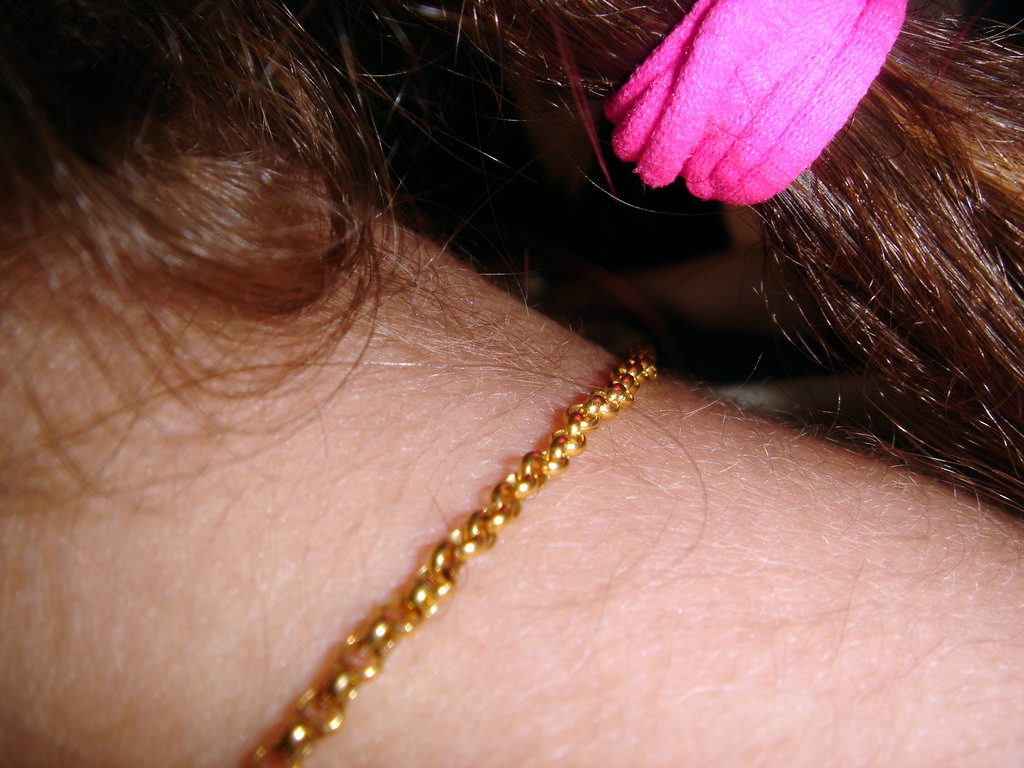
A close up of a neck bearing a gold hair. You can see hair pulled back with a pink tie.
Hair, tie, necklace by dion gillard

Imagination

Archive of Our Own
Fandom: Harry Potter – J. K. Rowling
Relationship: Marietta Edgecombe/Nymphadora Tonks (unrequited)

This series is a birthday gift for brightthunder. I have to apologise, as not only is this a day late, the muse is apparently not schmoopy today.

I see her in the lift sometimes, that Auror. She comes down to lunch from one of the floors I’ll never get access to. No one trusts a sneak, not even organisations that take their information. Not even me.

Everyone plays with their face though, including me. If I work hard, and keep my mind on it all day, I can illusion the scars away. But I don’t get to change for free and she does. I like to imagine her smiling at me, from all the different faces: hers and mine without the scars, and Cho’s, and even Granger’s.

A woman looking out of an elevator as the doors close. The photograph is monochrome other than some red at her chest.
elevator doors closing by irina slutsky